

Short answer: No, not in the way parents fear. The research that worries people looked at adults venting anger at a target while thinking about the person who angered them. That is a different activity from a six year old playing a hitting game with a dinosaur. What determines the outcome is framing: presented as a game and a target, a bop bag is physical play. Presented as a place to take out anger at someone, it becomes rehearsal. Keep it a game.
Where the worry comes from
The concern is not irrational, and it deserves better than a brand brushing it aside. It traces to decades of work on the catharsis hypothesis, the old idea that expressing anger drains it. Researchers repeatedly found the opposite for adults: people asked to hit a bag while ruminating on someone who provoked them tended to stay angry, sometimes more so.
That finding is real. It is also narrow. The experimental setup involves a provocation, an instruction to dwell on it, and a target that stands in for a person. Almost none of that describes a child hitting a bop bag in a living room on a rainy Tuesday.
What is actually happening when a child hits a bag
Three things, none of which are rehearsing aggression.
Physical exertion. A child punching and kicking for fifteen minutes is doing interval cardio. The regulating effect parents notice is mostly this. It is the same reason a long walk helps an adult.
Proprioceptive input. Pushing against resistance gives the nervous system strong feedback about where the body is in space. Occupational therapists use this deliberately with children who are dysregulated, and it is why heavy work like carrying, pushing and climbing tends to settle kids down rather than wind them up.
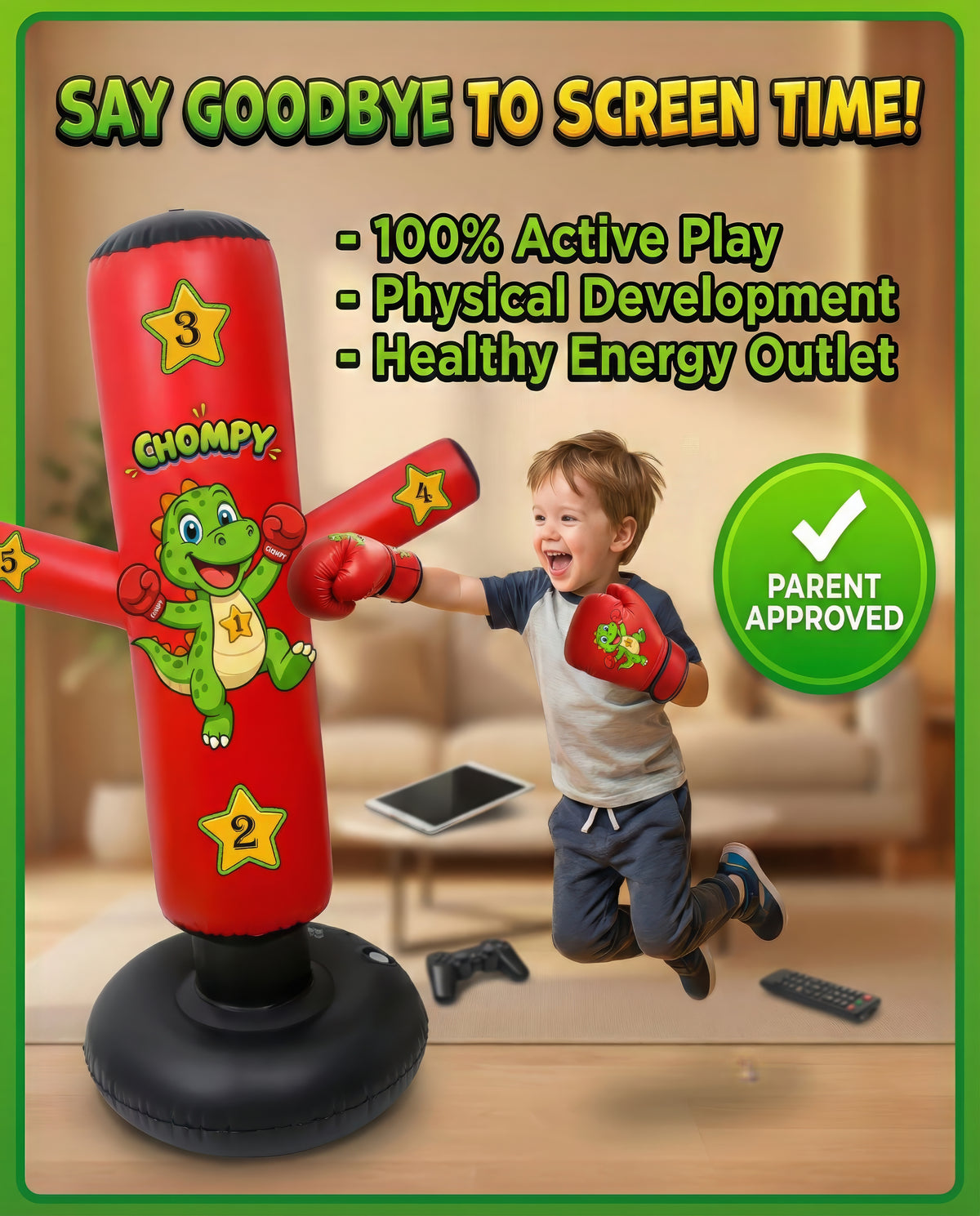
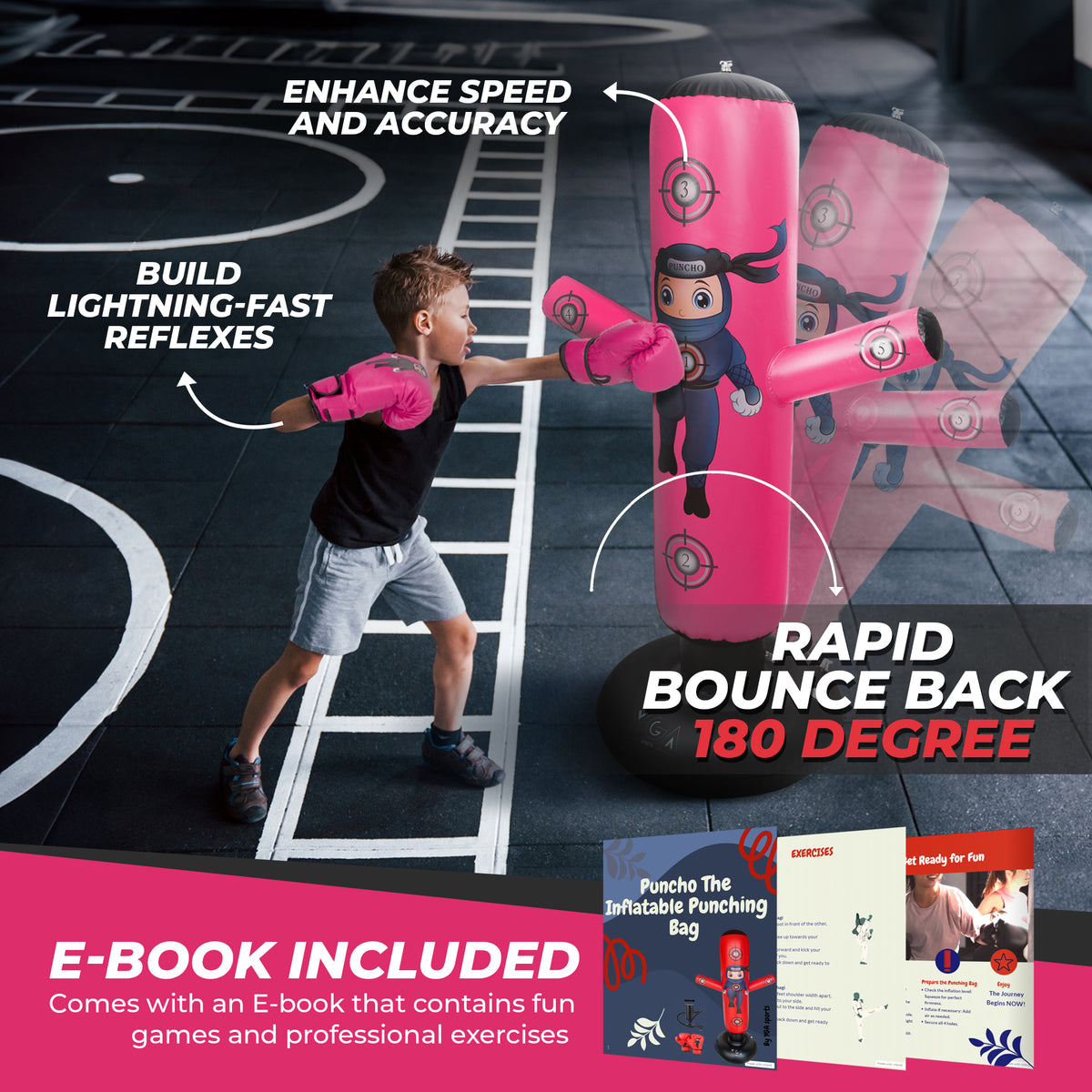
A rule based game. Aim at number three. Ten punches, then swap. Take turns. This is structured play with constraints, which is the opposite of an uncontrolled outburst.

The framing that matters
Here is the distinction that decides which version you get, and it costs nothing to apply.
| Turns it into play | Turns it into rehearsal |
|---|---|
| "Hit number four, then number two." | "Pretend it's your brother." |
| "How many in ten seconds?" | "Show me how mad you are." |
| "Your turn, then mine." | "Go hit it until you're not angry." |
| Named as a character | Named as a person or an enemy |
The left column is a game with rules and a target. The right column asks a child to hold a grievance in mind while striking, which is exactly the condition the research warns about. Parents rarely do the right column on purpose. It slips in through well meant lines like "go get your anger out."
Better language for a heated moment
You do not have to pretend the bag has nothing to do with big feelings. Children do go to it when they are upset, and that is fine. The useful move is to point at the body rather than the grievance.
- Instead of "go hit it until you calm down," try "let's do twenty and count them."
- Instead of "get your anger out," try "your body needs to move, come on."
- Afterwards, talk about what happened. The bag handles the physiology, the conversation handles the conflict. Neither replaces the other.
One parent described this arriving on its own: her son worked out that when he is a little angry he can go hit Chompy, and the rest of the time he just casually hits it as he walks by. That is the healthy pattern. It is a piece of furniture he has a relationship with, not a ritual for processing rage.
What parents actually report
Across our reviews, the recurring words are calmer, busy, tired out and off the screen. Nobody writes in to say their child became more aggressive. The most common description is a child who had too much energy and now has somewhere to put it, which is a different problem being solved than the one the catharsis literature studied.
That is not a controlled trial and we are not going to present it as one. It is consistent, though, and it matches what the exertion and proprioception explanation would predict.
Common questions
Is hitting a bag different from hitting a sibling?
Yes, and children grasp this faster than adults expect, provided the boundary is physical rather than abstract. "The bag is the only thing we hit" is a rule a four year old can hold. Numbered targets make it concrete.
Should I stop my child if they name the bag after a person?
Redirect it rather than making it a confrontation. Give the bag back its own name and turn the session into a counting game. You are changing the activity, not punishing the feeling.
Does martial arts training make kids aggressive?
The research on structured martial arts instruction generally points the other way, toward better self control, because it is rule bound and supervised. A bop bag game with turns and targets sits closer to that end than to venting.
My child is already aggressive. Will this help?
It may help with the energy component, and many parents find it does. It is not a treatment for a behavioural concern. If aggression is a real and ongoing worry, that is a conversation for your paediatrician, and a punching bag is not a substitute for it. We would rather say that plainly than sell you one.
What age does this apply to?
The framing advice works across the range. Chompy is rated from age 3 and suits roughly 3 to 6, Puncho is rated from 3 and suits roughly 6 to 12.
The short version
A bop bag does not make children aggressive. Asking a child to dwell on anger while hitting something might, which is a framing problem rather than an equipment problem. Make it a game with targets, turns and counting, and what you get is a tired child, not an angrier one.