

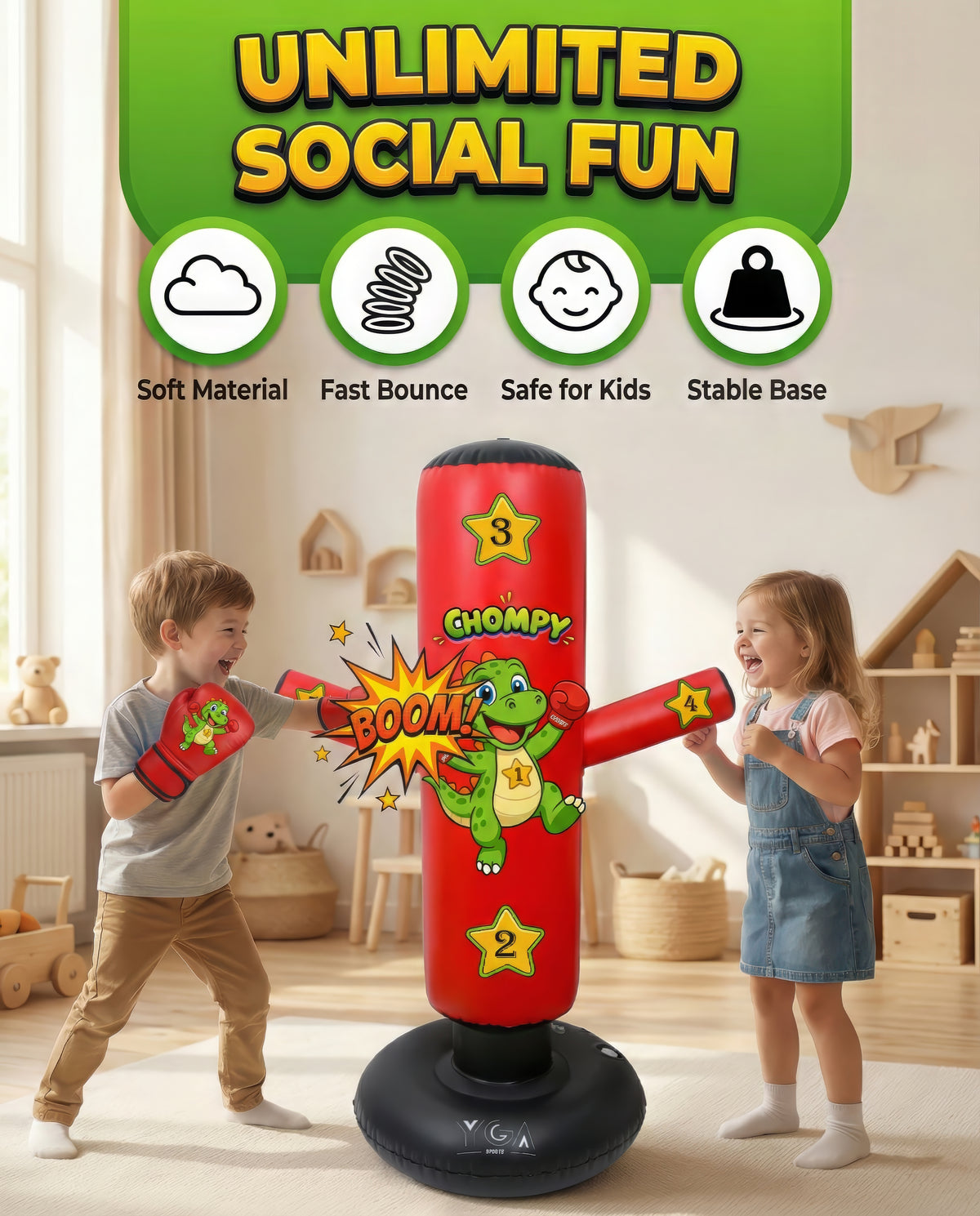
Short answer: A bop bag gets used for months instead of days when it has games attached to it. Below are ten that need no equipment beyond the bag, sorted by age. The numbered targets on Chompy make most of them work without an adult refereeing.
Why games matter more than the bag
Almost every punching bag review that says "used it twice" describes the same thing: the child hit it, enjoyed it, and then had no reason to come back. Hitting is not an activity. A game is.
The ten below are the ones parents in our reviews describe inventing on their own, cleaned up and written down. Each takes under a minute to explain.
Ages 3 to 5
1. Call the number
You call a number, they hit that target. Start slow, speed up. This is the foundational one, because it converts hitting into listening and aiming. It also teaches number recognition without anyone mentioning numbers.
2. Colour hunt
Instead of numbers, call a colour on the bag. Works before a child reads numerals confidently.
3. Ten and freeze
Ten punches, then freeze like a statue until you say go. The freeze is the point. This is where self control gets practised, and small children find the stopping funnier than the hitting.
4. Gentle and strong
You call gentle or strong, they match it. Useful well beyond the bag, because it gives a child language for calibrating force that you can use later at the dinner table.

Ages 5 to 8
5. Sequence memory
Call three numbers in order, they repeat the sequence. Add one number each round. It is a memory game that happens to be cardio, and it beats any adult at four or five items.
6. Sibling turns
Each child claims two numbers and may only hit theirs. Solves the whose turn it is fight structurally rather than with an adult in the middle. Several parents describe this as the reason two children can use one bag without supervision.
7. Beat the clock
Thirty seconds, count the hits, try to beat it tomorrow. Write the score on a sticky note near the bag. The record keeping is what brings them back.
8. Story rounds
The bag is a character in a story they are telling. Chompy comes with a free illustrated story about a small dinosaur finding his courage, and children reliably start acting scenes out against the bag. Let them. This is the longest lasting version of play on this list.
Ages 8 to 12
9. Combination drills
Two jabs and a kick, repeated. Then invent a three step combination and name it. Older children want something that feels like a real skill rather than a toy, and this delivers it without needing a coach.
10. Parent versus kid rounds
One minute each, alternating, counting hits. It is the only game on this list that reliably gets a parent off the couch, and it is the one children remember. Puncho handles adult strength without skidding, which is why it is the better bag for this one.

Three rules that keep it working
- Stop before they are bored. End a session while it is still fun and they will ask for it tomorrow.
- Keep it visible. A bag deflated in a cupboard is a bag that never gets used. Both of ours store flat, but if you have the corner, leave it standing.
- Let them invent. The best games in this list came from children, not from us. Ask what the rules are and then play by them.
Common questions
How long should a session last?
Ten to twenty minutes is typical and plenty. Parents most often use it before bath or bedtime, or in the gap between school and dinner when energy peaks.
Do these games work with one child?
Most do. Number calling, sequences, beat the clock and combinations all work solo with an adult calling. Sibling turns obviously needs two.
Which bag is better for games?
Chompy has five numbered targets printed on it, so the calling games work straight out of the box for ages 3 to 8. Puncho suits the drill and rounds style games for older kids.
My child hits the bag too hard and knocks it over.
Check the base is filled completely. An underfilled base is the usual cause. If it is full and still skidding, the child has probably outgrown the smaller bag.
Can these be played outdoors?
Yes. The weighted base stands on grass, patio and driveway. Bring it in when you are done so it does not sit in sun or rain.
The short version
Buy the bag, then spend one minute teaching a game. That minute is the difference between a toy used twice and one used all winter.