

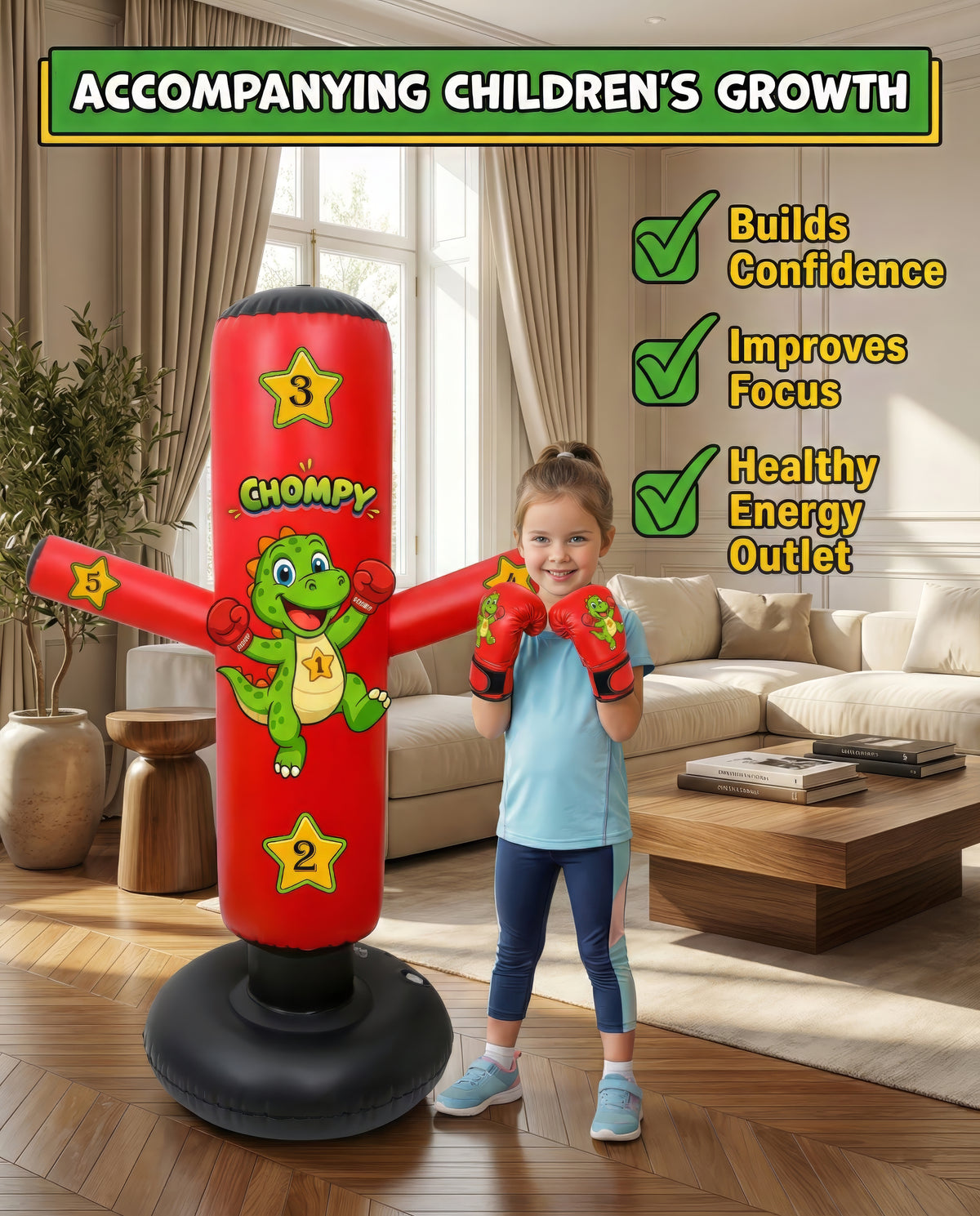
Short answer: Yes, an inflatable bop bag is safe for a toddler from about age 3, provided it is the inflatable kind with a weighted base, it is used on a clear floor, and an adult is nearby. The dangers parents worry about come from the wrong equipment rather than the activity. A hanging heavy bag or a rigid free standing bag is not appropriate for a small child. A soft air filled bag that tips and returns is.
Why age 3 is the usual starting point
Below three, most children do not yet have the balance to throw a strike and stay upright. They also cannot reliably follow a rule like "only hit the bag, not your sister." Three is roughly where both of those arrive, which is why Chompy is rated from age 3 rather than younger.
It is not a hard biological line. Some two year olds are steady on their feet and some four year olds are not. Use it as a default and adjust for the child in front of you.
The four real risks, and what removes each one
1. Falling into furniture
This is the actual injury risk, and it has nothing to do with the bag. A toddler who throws their weight forward and misses will keep going. The fix is floor space: clear roughly an arm span in every direction, and keep the bag away from coffee table corners, fireplace edges and glass.
2. The bag not coming back up
A bag that stays down invites a child to climb on it. A weighted base is what prevents this. Both of our bags use a base you fill with water or sand so the bag springs upright immediately after every hit. Fill it properly on day one. An underfilled base is the single most common setup mistake.
3. Materials going in a mouth
Toddlers mouth things. That makes material composition a real question rather than a marketing line. Chompy is built from non toxic materials with double sealed seams, which also keeps it from springing a slow leak when a child leans on it.
4. Hitting a person instead
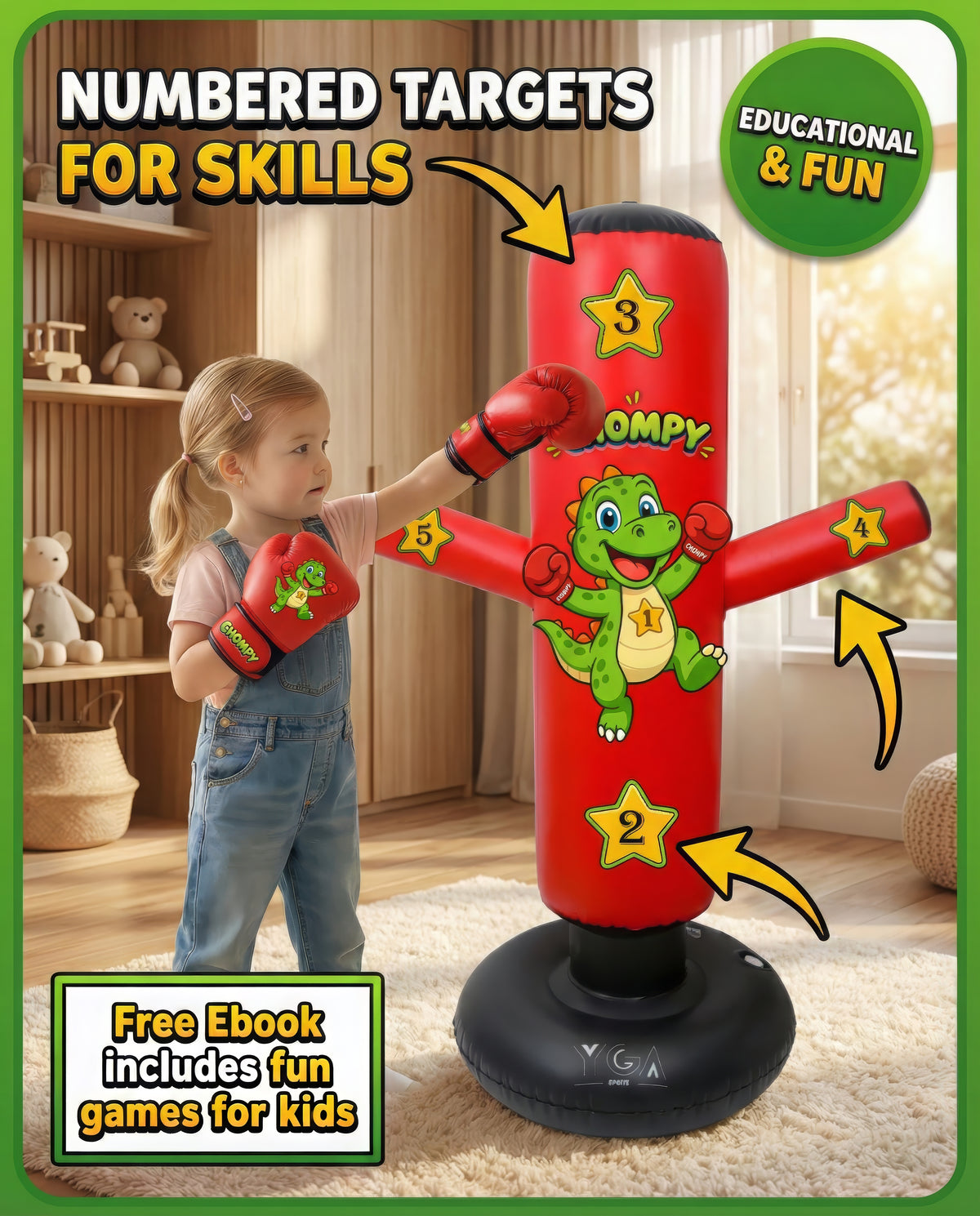
Worth naming honestly because parents think it and rarely ask. The rule that works is simple and physical, not verbal: the bag has a spot, and that spot is where punching happens. Chompy's five numbered targets do this work for you. "Hit number three" is a rule a three year old can actually follow, where "be gentle with your brother" is not.

What to avoid entirely at this age
- Hanging heavy bags. They do not move away from a missed strike, and the mounting hardware is an overhead risk.
- Rigid free standing bags with hard plastic bases. The base itself becomes a trip and shin hazard at toddler height.
- Adult boxing gloves. Too heavy, and they slide off. Use gloves sized for small hands, which is why ours ship with the bag.
- Underinflated bags. A soft bag folds instead of rebounding, which is how children end up on top of it.
A five minute setup that removes most of the risk
- Fill the base completely with water or sand before the first use.
- Inflate until firm, not until straining. A bag with a little give absorbs better.
- Clear an arm span of floor in every direction.
- Put it on carpet or a rug if you have one, for grip and for softer landings.
- Set the one rule out loud on day one, and make it about the target rather than about behaviour.
Does punching a bag make a toddler more aggressive?
This is the question parents ask most often, and it deserves a straight answer rather than a sales one. The concern traces back to old catharsis research suggesting that rehearsing aggression can reinforce it. That research looked at adults venting anger at a target while dwelling on the person who angered them, which is not what a four year old does with a dinosaur.
What we hear from parents is consistently the opposite of escalation: a child who has somewhere to put a big feeling calms down faster. One parent put it plainly in a review: her son learned that if he is a little angry, he can go hit Chompy, and the rest of the time he just casually hits it walking past.
The practical distinction is framing. If the bag is introduced as a game and a target, it functions as physical play. If an adult frames it as a place to take out anger at a person, that is a different activity. Keep it a game.
Common questions
What age can a child start using a punching bag?
About age 3 for an inflatable bop bag with a weighted base. Hanging heavy bags are not appropriate until the teen years and should be introduced through a coach.
Do toddlers need gloves?
Not strictly, because the surface is soft. Gloves mostly help with grip and with making it feel like a real activity. Ours are sized for small hands and come in the box.
Can it be used on hardwood or tile?
Yes. A rug is better because it grips the base and softens a fall, but the base is weighted rather than suction mounted, so it works on any flat floor.
How much supervision does it need?
For a three or four year old, stay in the room. By five or six, most parents are comfortable in earshot. The bag itself is not the concern, the surrounding furniture is.
Will it damage walls or furniture?
Not the bag itself, which is soft and air filled. The risk is the bag tipping into something, which is why the floor clearance matters more than anything else on this page.
What if my child is under 3?
Wait, or treat it as a supervised push toy rather than something to strike. The balance is the limiting factor, not the bag.
The short version
The activity is safe from about age 3. What makes it safe is the equipment type, a properly filled base, and clear floor space. Get those three right and a bop bag is one of the lower risk ways for a small child to burn a large amount of energy indoors.